


You Can't Fix The Risks You Don't Know Exist.
Most organizations invest in security tools and follow best practices, but every environment has blind spots. Configuration errors, exposed services, and overlooked vulnerabilities can create opportunities for attackers that aren't obvious during day-to-day operations.
A Threat Assessment identifies exploitable weaknesses before they're discovered by someone with malicious intent, giving you a clear understanding of where risk exists and what should be addressed first.
Many Businesses Are Struggling With...
Unknown Attack Paths
Hidden vulnerabilities and misconfigurations can create opportunities that remain unnoticed until they're exploited.
Assumed Security
Security controls are in place, but there is no evidence that they would withstand a real-world attack.
Unclear Priorities
Without understanding which weaknesses pose the greatest risk, it's difficult to know where remediation efforts should begin.
Understand Your Environment Through An Attacker's Eyes.
A Threat Assessment safely evaluates your environment for exploitable vulnerabilities, helping you understand where attackers could gain access and providing clear recommendations for reducing that risk.
Identify Real Vulnerabilities
Discover weaknesses that could be exploited before they become security incidents.
Prioritize Risk
Focus remediation efforts on the issues that present the greatest business risk.
Validate Security Decisions
Support future investments and security improvements with objective testing results.
A Threat Assessment is designed for organizations that want a deeper understanding of the technical risks within their environment before planning future security improvements.
You may be ready for a Threat Assessment if:
- You haven't tested your environment for exploitable vulnerabilities.
- Significant infrastructure or cloud changes have recently been made.
- Customers, insurers, or regulators require penetration testing.
- You want independent validation of your organization's security posture.
A Threat Assessment provides the technical insight needed to make informed security decisions and prioritize improvements with confidence.
Technical Security Testing
Identify Weaknesses Before They're Exploited.
A Threat Assessment evaluates the areas most commonly targeted by attackers, helping uncover vulnerabilities that may not be visible through routine administration or automated scanning alone.
External Attack Surface
Evaluate internet-facing systems and services for exploitable vulnerabilities.
Internal Security Testing
Assess internal systems and configurations to identify opportunities for lateral movement or privilege escalation.
Application Testing
Review web applications and externally accessible services for common security weaknesses.
Configuration Review
Identify insecure settings that increase exposure or weaken existing security controls.
Vulnerability Validation
Confirm which findings represent real, exploitable risk instead of simply reporting potential issues.
Prioritized Reporting
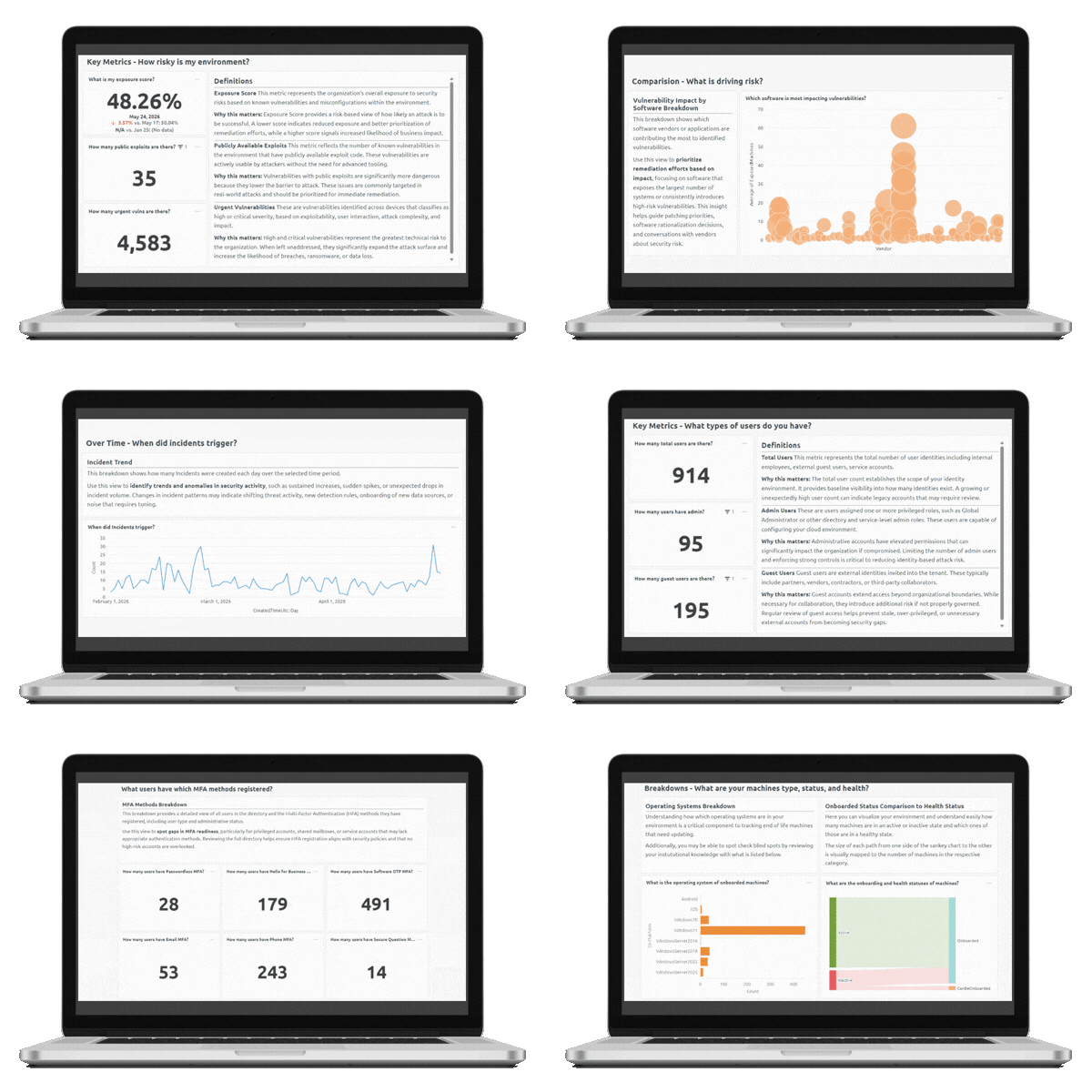
Receive actionable findings organized by business impact, exploitability, and remediation priority.
Actionable Findings
More Than A List of Vulnerabilities.
A long report filled with technical findings doesn't help if you don't know what to fix first.
Every Threat Assessment includes prioritized recommendations that focus on real business risk, helping your team understand which vulnerabilities matter most, why they matter, and how to reduce the likelihood of compromise.
Instead of receiving hundreds of disconnected findings, you'll receive a clear picture of your attack surface and a practical path toward remediation.
Discover Your Biggest Security Risks.
Identify exploitable weaknesses, prioritize remediation efforts, and strengthen your security with confidence.
Frequently Asked Questions
What is a Threat Assessment?
A Threat Assessment is a structured security engagement that evaluates your environment for exploitable vulnerabilities and provides prioritized recommendations for reducing risk.
Is this the same as a penetration test?
A Threat Assessment includes penetration testing techniques but focuses on delivering a broader understanding of your attack surface, validating exploitable weaknesses, and providing actionable guidance rather than simply demonstrating exploitation.
Will testing disrupt our environment?
Testing is planned and coordinated to minimize operational impact while still providing meaningful security results.
What will we receive?
You'll receive a detailed report outlining validated findings, business impact, remediation recommendations, and prioritized next steps.
How often should a Threat Assessment be performed?
Most organizations benefit from regular testing, particularly after significant infrastructure changes, major application updates, or as part of an ongoing security program.
Can DotStar help remediate the findings?
Yes. Once the assessment is complete, DotStar can help implement recommendations through services such as Business Protection, Cloud Control, Detect & Respond, or Security Partner.