


You Can't Prioritize What You Can't See.
Most organizations are already doing something for security. But when priorities are based on assumptions, isolated findings, or the latest concern, it is difficult to know whether time and resources are going where they will have the greatest impact.
Many Businesses Are Struggling With...
No Clear Baseline To Start Measuring From
Security tools, policies, and processes may be in place, but there is no complete picture of how the security program is performing.
Too Many Company Priorities
Findings, recommendations, and new requirements keep piling up, making it difficult to know what deserves attention first.
Uncertainty About What Comes Next
Without a clear view of strengths and gaps, security decisions can become reactive instead of part of a deliberate path forward.
Know Where You Stand Before Deciding What Comes Next.
DotStar's Risk Assessment uses the CIS Critical Security Controls to evaluate your current security program, identify meaningful gaps, and translate our findings into clear priorities and a practical path forward.
Built on the CIS Controls
Evaluate your security program against a recognized, prioritized framework for reducing cybersecurity risk.
Evidence Before Assumptions
Look beyond whether a control exists to understand how security practices are actually working.
Priorities You Can Act On
Turn findings into a clear view of what matters now, what should happen next, and what can come later.
The Risk Assessment is a strong first step for organizations that want to improve security but need a clearer understanding of where they stand and what to prioritize.
You may be ready for a Risk Assessment if:
- You are not sure where your most meaningful security gaps exist.
- You have competing security priorities and need help deciding what comes first.
- You want an objective baseline before making additional security investments.
- You need a practical roadmap for improving security over time.
The assessment gives you a clear starting point. What happens next should be based on what we actually find.
Beyond the Checkbox
A Control Existing Doesn't Mean It's Working.
The CIS Controls provide the structure for our evaluation. DotStar's assessment methodology helps determine how well those security practices actually function in your organization.
Meaningful
Does the practice meaningfully reduce risk and support the outcome it is intended to achieve?
Timely
Is it performed consistently and within a timeframe that makes it effective?
Documented
Is the practice formally defined so it does not depend on memory or informal knowledge?
Verifiable
Is there evidence showing that the practice is actually occurring?
A Better Assessment Process
We Review First.
Then We Ask Better Questions.
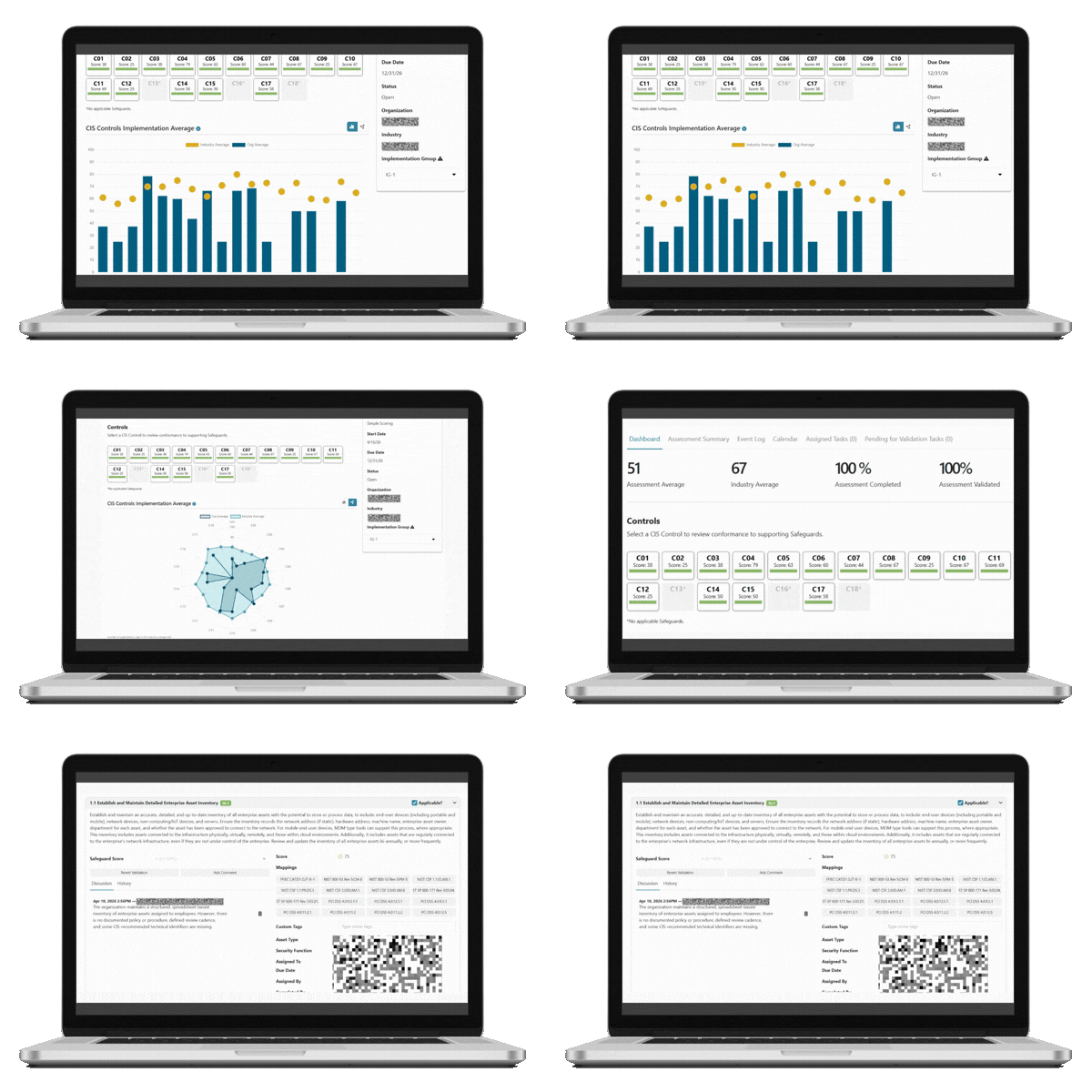
Many assessments start with a long, generic questionnaire. DotStar starts with the information and evidence you already have.
We review existing documentation first, then use what we learn to create a tailored questionnaire that validates findings, fills gaps, and focuses the conversation where more context is actually needed.
The result is an assessment grounded in evidence, not just self-reported answers.
Know Where You Stand.
Know What Comes Next.
A clearer security program starts with understanding what is working, where meaningful gaps exist, and which improvements deserve your attention first.
Frequently Asked Questions
What is included in the Risk Assessment?
The Risk Assessment includes a review of your current security program against the CIS Controls, evaluation using DotStar's auditing criteria, validation of findings, prioritized recommendations, and a practical roadmap for improvement.
Why does DotStar use the CIS Controls?
The CIS Controls provide a practical, prioritized framework for evaluating the safeguards and practices that contribute to a stronger security program. They give the assessment structure while allowing findings to be evaluated in the context of your organization.
Do I start by filling out a questionnaire?
No. DotStar begins by reviewing existing documentation and evidence. We then use what we learn to create a tailored questionnaire that validates findings, fills gaps, and focuses on areas where additional context is needed.
How is this different from a vulnerability scan or penetration test?
A vulnerability scan or penetration test looks for technical weaknesses in a specific environment or system. The Risk Assessment takes a broader view of your security program, including the controls, processes, and practices that shape how security functions across the organization.
What do we receive at the end of the assessment?
You receive a clear view of your current security posture, identified strengths and gaps, prioritized recommendations, and a roadmap to help guide what should happen next.